
We usually think of professional development as something that we do for career advancement — to prepare us for the next promotion, or help save us from drowning in the promotion that we have already received. But keeping your learning brain active is a critical component of overarching wellness. Continuous learning is medicine. The science is piling up: engaging in continuous learning isn’t just good for the mind, it’s deeply good for the body, our stress levels, and even our longevity. For most of us, our professional life receives a lot of our attention, making it a convenient place to prioritize continuous learning. Better health + improved job performance, sounds like a win-win.
1. Learning keeps the brain young.
Know what brain cells hate? Boredom. Monotony. No new inputs. Brains LOVE novelty. A 2013 study in Neurology found that people who engaged in lifelong learning and mentally stimulating activities had 32% slower rates of cognitive decline compared to those who didn’t.1 Think of it like exercise: every time you take on a new challenge, you’re strengthening neural pathways and building cognitive reserve — your brain’s ability to stay agile and strong even as it ages. Get your reps in.
2. Learning reduces the risk of dementia.
Two nuns walk into an abbey… just kidding. But for real, one of my favorite long-term studies is the Nun Study, which followed 678 Catholic sisters for decades. Researchers discovered that nuns who wrote with more linguistic complexity in their early lives were 80% less likely to develop Alzheimer’s disease later on.2 More recently, a study in JAMA Psychiatry found that older adults who learned quilting or digital photography improved their memory scores by 14% in just six weeks, while control groups showed no such boost.3 To me, that’s remarkable: picking up a new skill is like giving your brain a protective shield.
3. Learning regulates stress and boosts mood.
When was the last time you experienced a flow state? That feeling when you get lost in a project, listening to music, reading a great book, writing, or learning something new, you slip into a kind of timeless state. Psychologists call it flow. Research shows it can lower cortisol (our main stress hormone) by as much as 20%.4 Brain scans confirm why: flow turns down activity in the amygdala (our fear center) and lights up the prefrontal cortex (associated with focus and calm).5 Translation: learning doesn’t just stretch your mind, it soothes it. Now, I am not sure if this is backed by science yet, but we aren’t talking about scrolling on TikTok. If we are talking about improved health outcomes, I’d put my money on reading a book over hours of social media scrolling.
4. Learning strengthens resilience.
Let’s be honest—learning something new is uncomfortable. You’re clumsy, you make mistakes, you doubt yourself. But that’s the point. A 2020 study found that adults who engaged in lifelong learning scored 24% higher on measures of resilience than those who didn’t.6 Each time you face the awkwardness of being a beginner, you’re practicing adaptability. That practice carries over when life inevitably throws harder challenges at you. So, be proud of yourself every time you walk into a new room, try a new skill, or learn something that shifts your understanding of the world.
5. Learning builds social and physical health.
Here’s something we sometimes forget: learning is frequently social. Whether you’re taking a class, joining a book group, or trading recipes, it connects you to other people, and often new people. The Harvard Study of Adult Development, the longest-running study on happiness, has shown that good relationships are more predictive of long-term health than cholesterol levels or income.7 Even cooler, older adults engaged in lifelong learning are 38% less likely to report loneliness, which is linked to a 26% higher risk of early mortality.8 Learning together is both brain food and heart medicine.
The bottom line: Is professional development for professional advancement. Yes. But it is more than that. It’s preventive health care, right up there with exercise, sleep, and good nutrition. It slows cognitive decline, protects against dementia, regulates stress, builds resilience, and strengthens social connection.
So if you’ve been waiting for the “right time” to start that class, pick up a book, or try your hand at a new skill, the time is NOW. Think of it as an investment in your career and future health.
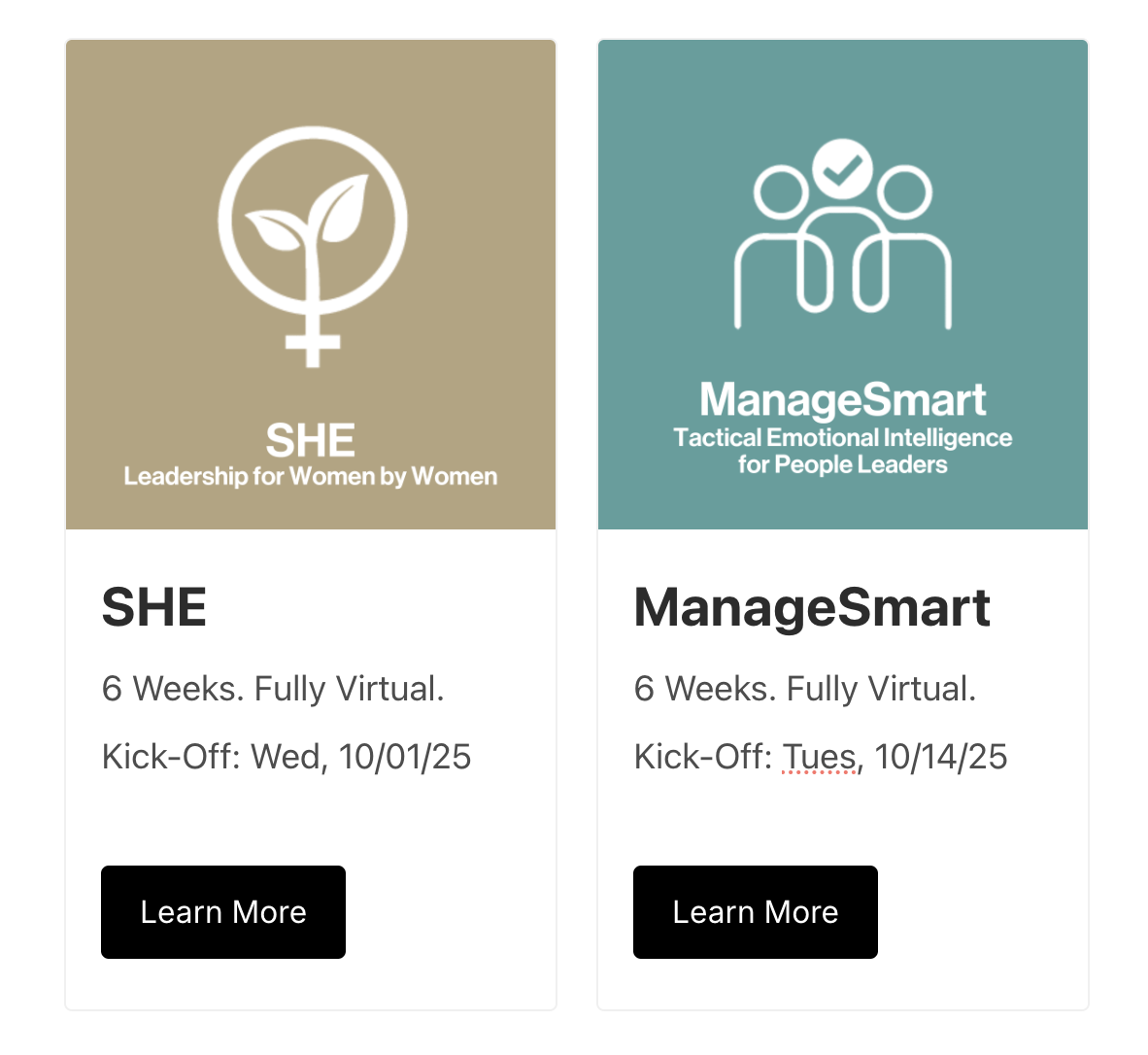
This fall, our live cohorts of SHE and ManageSmart open their doors again. Both programs are built around the science you just read about—learning that strengthens resilience, regulates stress, sharpens self-awareness, and deepens connection. They’re not just “professional development.” They’re gyms for your leadership brain, with a side effect of better health.
If you’ve been waiting for the right time, this is it. Future you—healthier, calmer, and a hell of a lot more effective at work—will be glad you said yes.
👉 Join SHE this fall
👉 Join ManageSmart this fall
XO,
Anna

The World’s Most Fun Leadership Newsletter (Probably).
Subscribe for free. Stay for the honesty, chaos, and a weekly leadership reality check.
🚨 Fall Enrollment Closing SOON 🚨
🧰 Leadership Resources: