
After two decades helping people and organizations navigate growth, transition, and disruption, I can say this with confidence:
We’re not in a temporary crisis.
We’re in a new era.
And it’s changing everything about how we lead.
This might feel obvious. You’ve probably felt it.
But if you’ve been wondering why your usual strategies feel increasingly shaky or why your best-laid plans fall apart halfway through the quarter, welcome to the club.
You are not imagining things.
Things are different.
And if we’re going to survive and lead well, we need to change how we think about strategy.
The Old Way: Change Was a Disruption
For decades, we treated change like an event.
A thing to prepare for, manage, and recover from—like a reorg, a software transition, a new CEO, or a market shake-up. Strategy was semi-stable. Change was the exception.
Companies created 3-year, 5-year, and 10-year strategic plans. When disruption hit, we paused to recalibrate. Change management was a skillset, yes—but a reactive one. Separate from “the real work.”
But be honest:
Do you know a single company CALMLY executing its 5-year strategic plan right now?
Exactly.
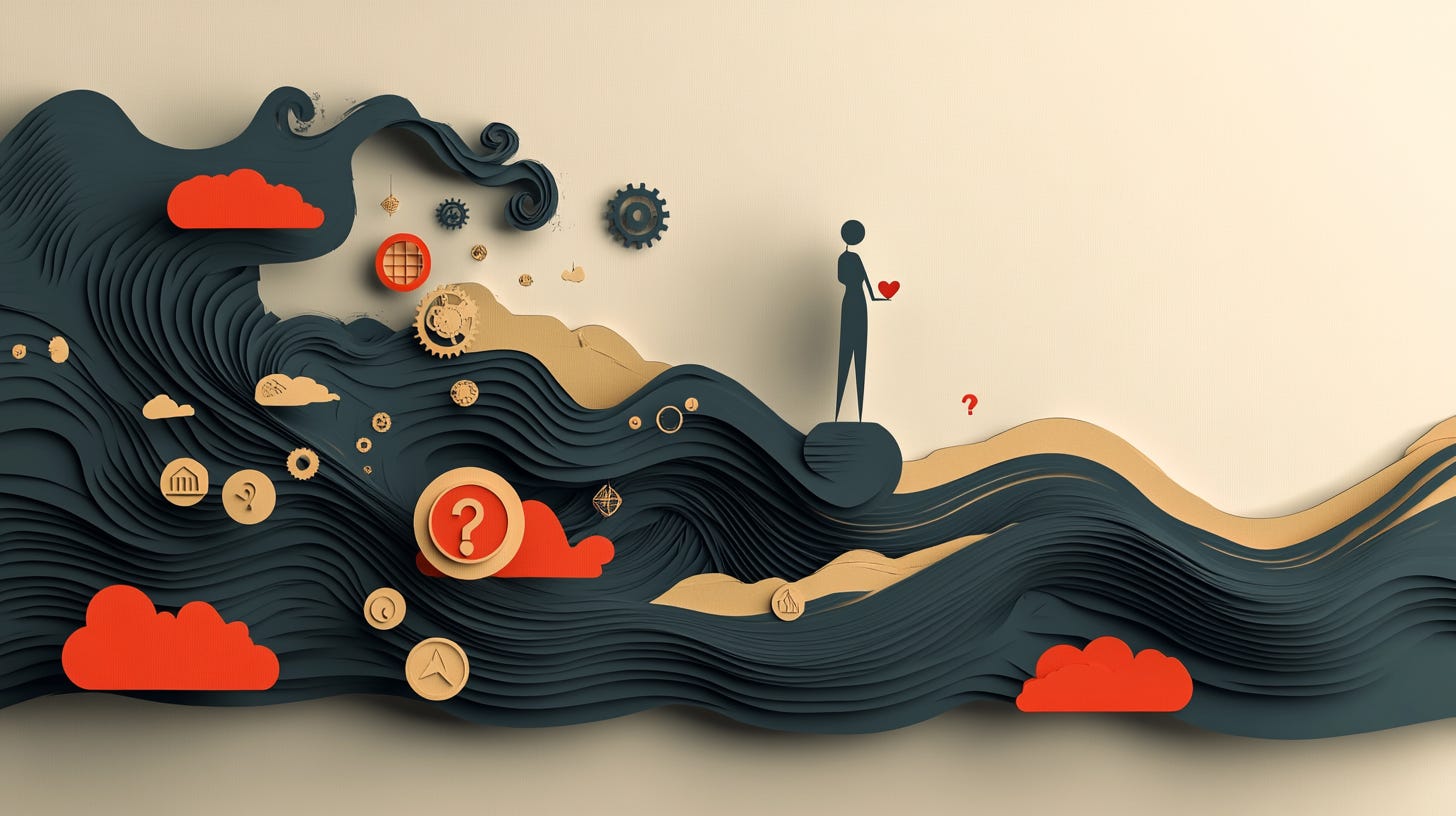
The New Reality: Welcome to the Chaos Era
What happens when change isn’t a phase, but the backdrop to our entire working lives?
Chaos Era (noun) /ˈkeɪ.ɑs/ /ˈerə,ˈirə/: A time defined not by a single crisis, but by the steady, unrelenting drumbeat of disruption.
Technology is evolving faster than we can regulate it.
The economy shifts weekly.
Climate events are reshaping cities.
Culture is fragmented. Workforces are fluid.
And the tools we once used to “manage change” are buckling under the pressure.
In this context, “change management” isn’t just a strategy.
It’s the only strategy.
So What Do We Do About It?
You know that we don’t do doom spirals here.
Let’s talk about how to lead in the chaos era — without losing our minds (or our people).

1. Embrace Reality: Acceptance & Mindset Shift
If you are still consciously or subconsciously “waiting for things to go back to normal,” I would gently ask you to pause and consider how realistic that expectation is, and the unintentional harm that unrealistic expectations can cause.
We all know that burnout is a real thing and resilience is a limited resource (If you are interested in learning more about resilience, check out Tasha Eurich’s new book, Shatterproof).
If we constantly wait for things to “go back to normal” or “calm the F down” and it never really does, month after month, year after year, that is a whole lot of cumulative disappointment. <Ugh>
Mindset shifts may seem woo-woo and hokey, but think of it like expectation setting. Success and failure are concepts based on expectations. The psychology is real.
This isn’t about giving up hope.
It’s about adjusting expectations so you don’t wear yourself out chasing a version of stability that doesn’t exist.

2. Agility Wins: The Rigid Will Fall Behind
Harsh, but true.
Agility isn’t just a project management buzzword anymore. It’s a survival skill.
It’s a critical mindset that will anchor the culture of all successful organizations of the future. The teams that thrive in the chaos era will be the ones who:
- Pivot fast without spinning out
- Communicate with humility
- Learn in public
- Value experimentation over perfection
And let’s be clear:
This doesn’t happen by accident. It requires deeply human systems —
autonomous, empowered people and cultures that prioritize growth mindsets, iterative practices, feedback-centric communication, and psychological safety.
No one’s perfect at this.
But the willingness to try? That’s the secret sauce.

3. Humility Is a Superpower: Let That Sh*t Go
The chaos era is one giant exercise in releasing what no longer serves us.
- Someone didn’t like your idea? Don’t take it personally.
- Your beautifully crafted plan had to be reworked? Mourn it, then move.
- The strategy changed again? Yep. It does that now.
If we clutch everything too tightly—our ideas, our preferences, our control—we end up fighting the current instead of adapting to it.
Elsa sang about it.
Mel Robbins talks about it on every podcast out there.
The Buddhists and the Stoics built entire philosophies around it.
Let it go. For real.

4. Humans Matter More Than Ever
When AI can write reports and build workflows, the most important thing you can bring to the table is… your humanity.
Emotional intelligence.
Discernment.
Moral reasoning.
The ability to stay grounded in a storm.
These aren’t “soft skills.”
They’re survival skills.
And for leaders? They’re non-negotiables.
People are carrying more than they show.
If you’re leading anyone right now, your presence, empathy, and attention are far more powerful than your task management app.
Deep Breath. We’re Here.
We’re still figuring it out.
Still leading, still adapting.
Still reheating the same cup of coffee three times a day and calling that progress.
(It is.)
The chaos era isn’t something we can outrun or out-schedule. It’s a reality to be lived with. It doesn’t mean we give up on structure or stop making plans. It means we approach those plans with humility and the capacity to shift. We have tools that work, but probably need to be adapted. We need to experiment and see what works. Pay attention to the people around us. Offer grace to ourselves and others.
Here’s what we believe at The Human Solution:
The future belongs to those who can hold space for ambiguity, lead with both compassion and clarity, and be changed by what they encounter.
Because in the chaos era, the most resilient strategy isn’t control.
It’s connection.
You don’t have to master it.
You just have to keep showing up.
And we’ll be right here with you.
XO,
Anna