

What If Independence Day Was About Your Nervous System?
Every Fourth of July we celebrate freedom.
Freedom from rule.
Freedom to choose.
Freedom to build something new.
But there is another kind of independence that’s a little quieter.
The kind that happens inside us.
The freedom to choose a different response than the one our nervous system has rehearsed for years.
The catch?
Most of us don’t actually feel free.
We feel compelled.
Compelled to overwork.
To overprepare.
To overthink.
To keep everyone happy.
To make a joke.
To stay in control.
Those reactions often feel like part of our personality.
Many times, they’re simply well-practiced survival strategies.

 The Survivalist
The Survivalist wants freedom from uncertainty.
If everything can be anticipated, everything can be managed.
Except life refuses to stay inside spreadsheets.
Real freedom begins when uncertainty becomes something you can tolerate instead of eliminate.
 The Warrior
The Warrior longs to be independent from weakness.
Strength becomes safety.
The challenge isn’t becoming less driven.
It’s discovering that rest doesn’t erase your strength.
 The Happy Denier
The Happy Denier wants freedom from conflict.
If everything stays positive, maybe everything stays okay.
But peace built on avoidance is surprisingly fragile.
Sometimes honesty is the most generous thing you can offer.
 The Deflector
The Deflector wants freedom from heaviness.
If everyone is laughing, maybe nobody notices the discomfort.
But genuine connection often begins after the joke ends.
 The Obsessor
The Obsessor longs to be independent from mistakes.
Perfection promises safety.
Until perfection becomes its own prison.
Sometimes progress is the bravest form of freedom.
 The Professor
The Professor seeks independence from not knowing.
Knowledge creates security.
But eventually every leader reaches a problem that can’t be solved with more information.
Sometimes wisdom arrives after action.
The Real Declaration
Maybe independence isn’t becoming someone new.
Maybe it’s creating just enough space between impulse and response to remember that you have a choice.
Victor Frankl famously wrote,
“Between stimulus and response there is a space.”
That space is where Tactical Emotional Intelligence lives.
Not because you’ll never react.
Not because you’ll stop being a Warrior, Survivalist, Professor, Deflector, Happy Denier, or Obsessor.
But because your archetype becomes information instead of instruction.
That’s a freedom worth celebrating.
Xo,
Elise
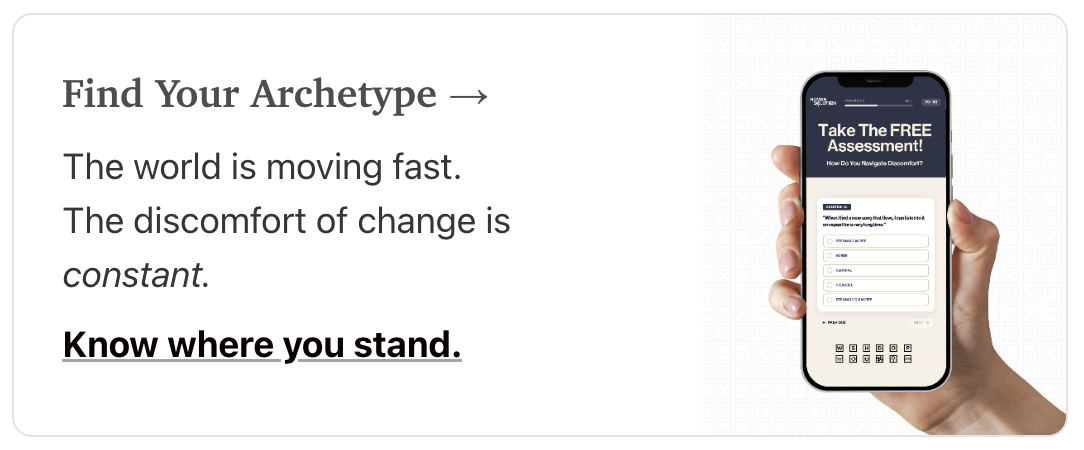
✨ Curious what your nervous system has been trying to protect all these years?
Take the Leadership Archetype Assessment and discover the stress pattern shaping your leadership, relationships, and decisions.
Because real independence isn’t freedom from discomfort.
It’s freedom to choose your response.
🧰 Free Leadership Resources: