
Elise + Anna = Excellent Adventures
It recently occurred to us that if we wanted an example of “How to utilize the Human Solutions toolkit for the powers of good,” we need look no further than directly at ourselves. Because Anna and I are the perfect example of two very different archetype profiles that combine forces to rock out (and occasionally drive each other nuts). 😈
So we’re pulling back the curtain of our office.
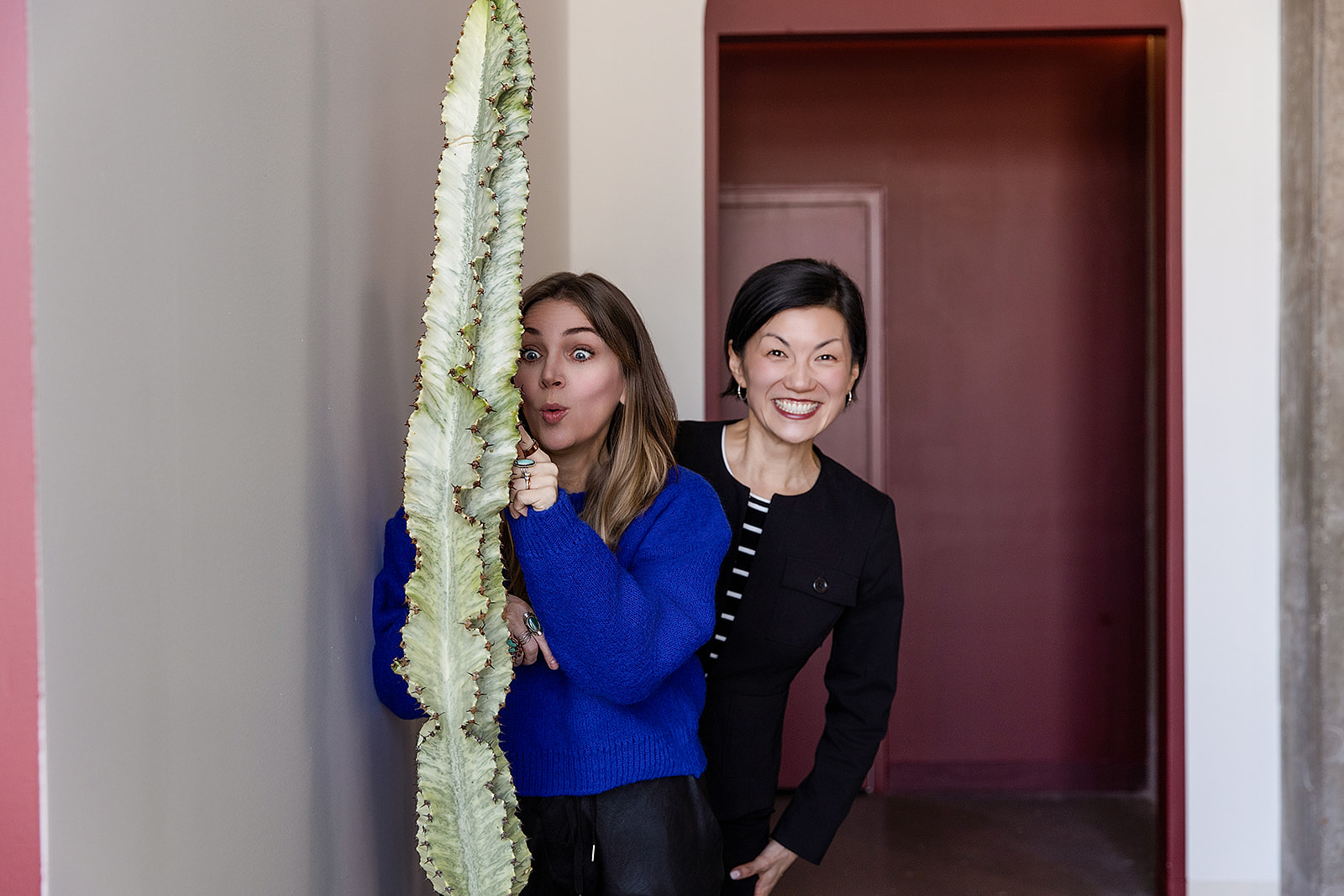
Because nothing says “professional launch strategy” quite like emailing your entire list to say: “Hello, here is a little peek inside my personality and nervous system. Please enjoy responsibly.”
So, here are our archetype results, and how they interact to make magic, and a little bit of healthy friction.
Quick reminder framing:
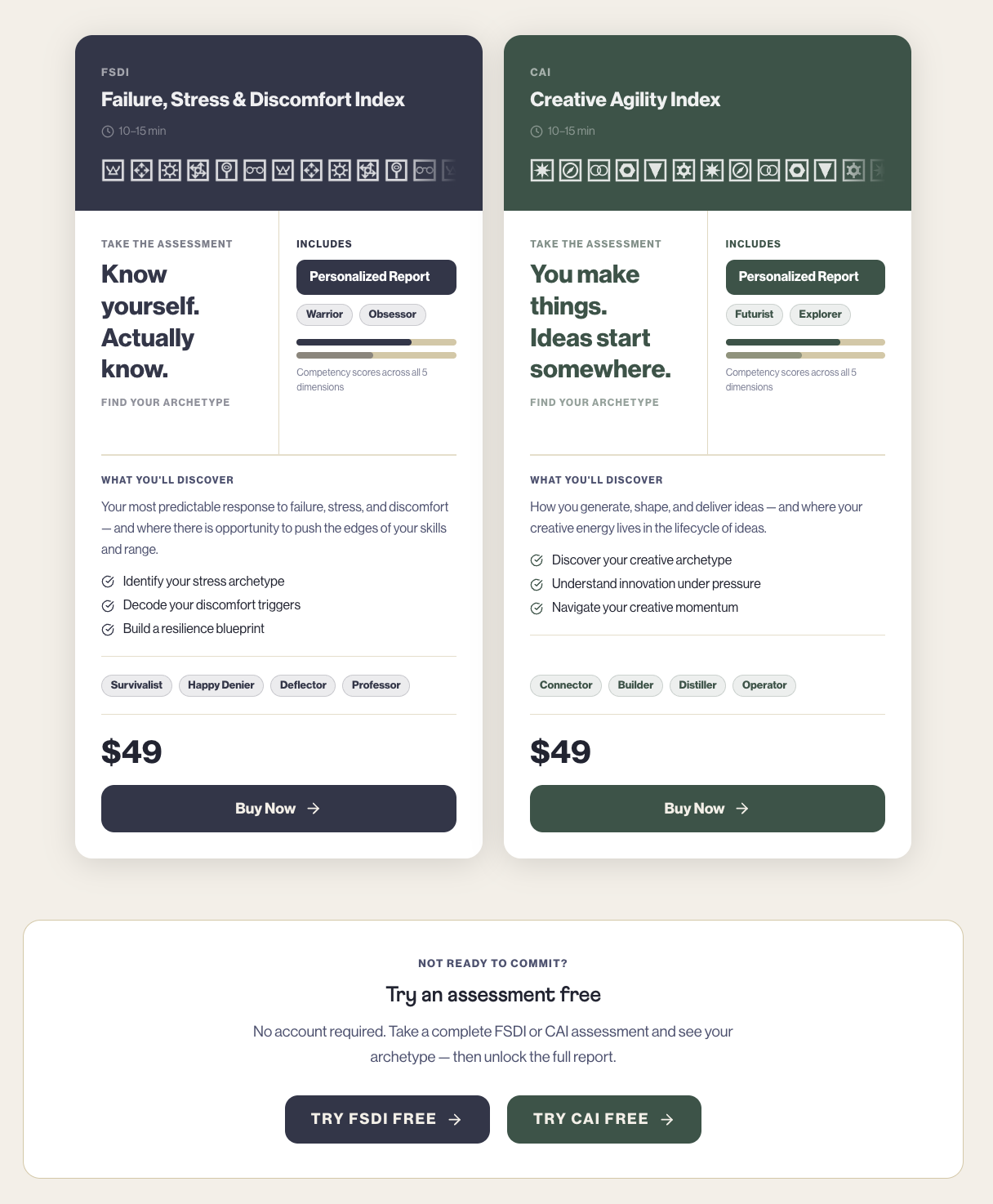
- The FSDI (Failure, Stress, & Discomfort Index) looks at how you navigate discomfort. How you behave under pressure.
- The CAI (Creative Agility Index) looks at how you move ideas from possibility toward reality. How you navigate creative ideation and problem-solving.
Meet Anna: Survivalist (FSDI) × Connector (CAI)
Anna’s creative wiring as The Connector means she reads the room before the room knows it is being read.
What is the energy of the room saying? Who is talking? Who is not talking? Who is talking past each other? Which people need to meet? Which person holds the missing piece for a project that they don’t know anything about yet? Triangulation for good.
Anna sees it.
Then The Survivalist kicks in and says, “Great. I have located a solution. I will now turn it into a plan with the follow-up TODO’s logged in the calendar task list.”
She hired a professional pickleball coach to teach her how to have fun. This is a true story. She also YouTube-ed the correct technique for holding a weed wacker before using one, because she was not going to wing a piece of garden equipment. Also, a true story.
She does not wing things.
My favorite Anna detail from her report: When her kids were little, she had an emergency kid-birthday-present stash in her basement. Organized by age range. Yup. Another true story.
Which is funny. But also, of course she did.
At work, this same pattern looks like her taking a half-formed human problem and turning it into a framework, a training experience, a language set, and a way for people to understand themselves without feeling like they need to crawl into a file cabinet and live there.
The shadow, because every gift comes with a tiny gremlin cousin, is that Anna can look very calm while holding seventeen invisible ropes, three relational tensions, one urgent client need, a strategic decision, and the emotional weight of everyone wondering if we are okay.
Which is very useful. And also, perhaps, a lot.
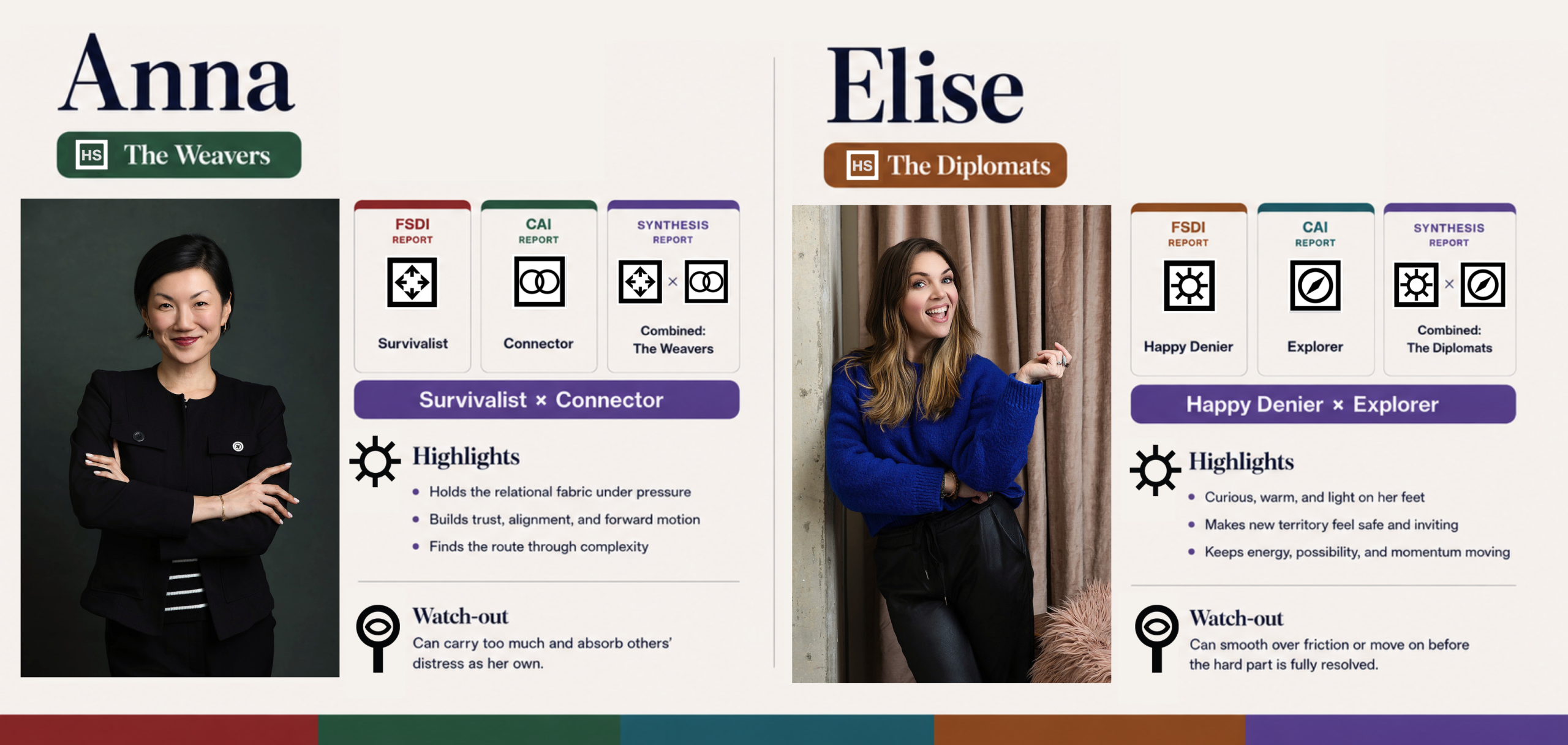
Meet me: Happy Denier (FSDI) × Explorer (CAI)
The Explorer wiring means I learn by doing. I do not want to sit in a tower and theorize about the thing for seven months while a committee studies the spiritual implications of maybe trying.
In case you don’t have an Elise in your life, learning by doing almost always entails dragging everything out of the closet and making a BIG mess. I want to try the thing. Draft the email. Move the graphic. Build the post. Test the subject line. Look at it on my phone. Change it. Change it. Change it.
I may or may not send Anna texts at 10:30 at night that say “Okay, new thought,” which are three words every business owner should fear and respect.
Do I have 25 tabs open on my browser at all times (both literally and figuratively)? Yes. Do I leave piles of “very important things” in random places that cannot be moved, lest you disrupt my ideation process? Also, yes. Is the finished product stunning? Abso-freaking-lutely.
Then we add my FSDI pattern: The Happy Denier.
Under pressure, my instinct is to keep things warm, light, and workable. I want the room to feel okay. I want the people to feel okay. I want the idea to feel exciting instead of terrifying. I want everyone to believe we can do this, even if “this” currently looks like a raccoon assembled a launch plan in a wind tunnel.
This is useful. Truly.
The shadow? Sometimes I smooth the mood instead of naming the hard thing. Sometimes my “we’ll figure it out!” energy is a gorgeous little emotional throw pillow placed directly on top of the problem.
Very cute. Still a problem.
And sometimes it is me tap-dancing away from the unglamorous middle because the new idea is shinier, the tension is awkward, and I would rather become a golden retriever with a Canva account than sit in unresolved discomfort for another twelve minutes.
Growth is beautiful. Growth also requires patience. Sometimes patience is hard.
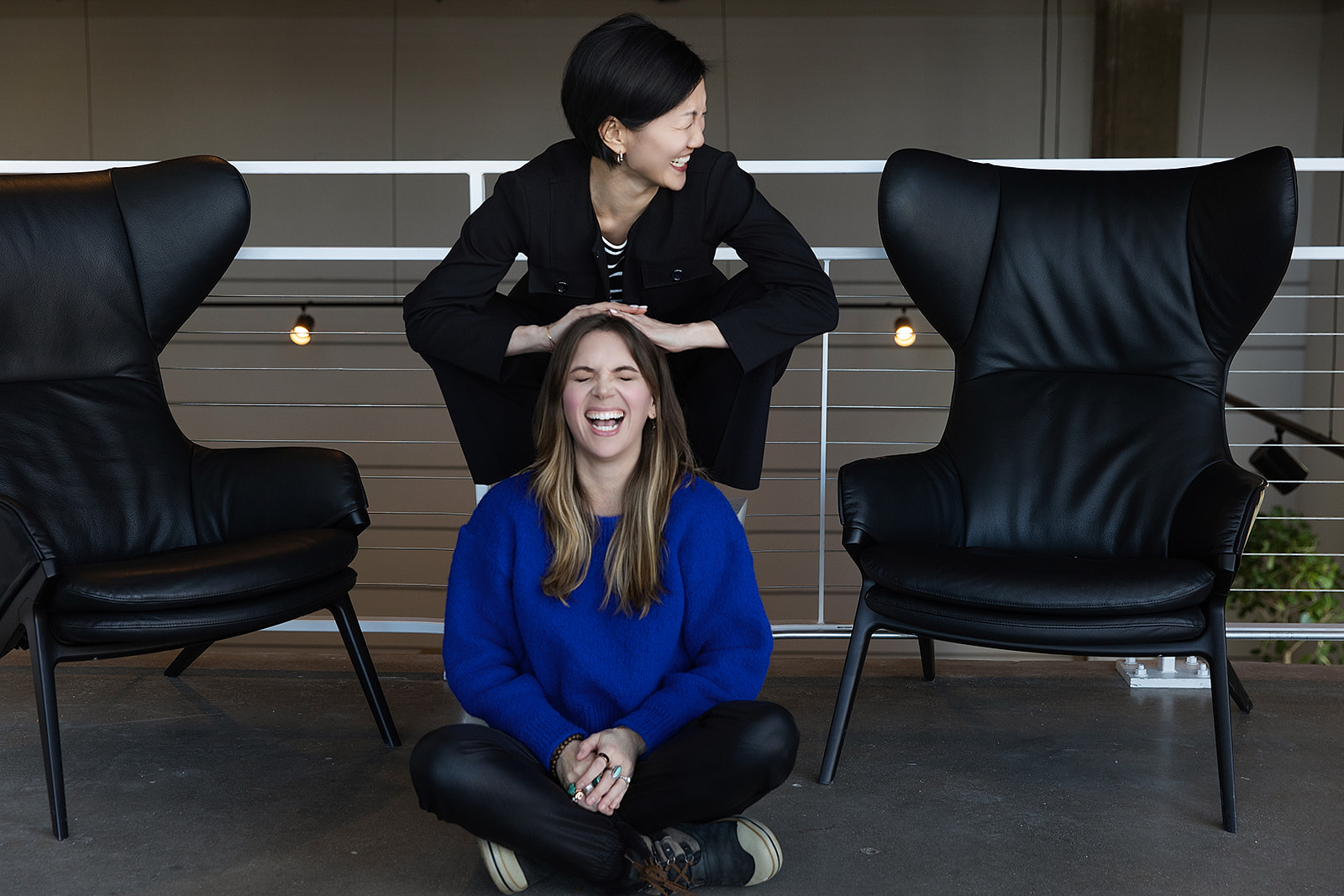
A Black Cat and A Golden Retriever Walk into a Room…
What happens when a Survivalist/Connector and a Happy Denier/Explorer spend A LOT of time together in roles where their main jobs are to interact with humans and make new things?
The Magic:
- Curiosity: We are both insanely curious and fascinated by the inner workings of people, systems, and the world at large. We are NEVER bored.
- Iteration: Our personalities and behavioral tendencies, combined with the type of work we do, make us both very open to new ways of doing things. New ideas. Beta tests. Trial and error. Anna is driven to connect the dots into new solutions; I am driven to jumble the pieces of a problem into new configurations. While on the surface, those drives might display differently in behavior, at their core, they are very similar.
- Discernment: Our discernment and taste are incredibly aligned. We may take different paths to get to “great,” but we agree on “great” when we see it.
The Meh (Not exactly conflict, but the places where we have to stay curious, aware, and accountable):
- Circadian Rhythms: Anna is up at 4:30 every morning, does her best generative work before 2:00 in the afternoon, and is Consistent, with a capital C. Like a true creative, my productivity bursts are less regimented and often come after dark. It totally works, but only because we know each other’s rhythms well and have reasonable expectations around communication and response times.
- Speed and Pacing: We don’t always accelerate and slow down at the same pace or in the same phase of a project. Neither one of us is particularly patient, but our impatience rears up at different phases of the creative cycle. Anna’s survivalist is always driving toward execution, and I am happy for much longer in the messy middle. And then when we actually get to execution, my perfectionist “nip and tuck” tendencies kick in, and Anna is like, “Stop picking at it. Leave it alone and let’s actually collect some data.”
- Energy Accountability Partners: We both have perfectionist tendencies and share the predispositions that can be a one-way path to burnout. These tendencies can look different behaviorally and flare up at different times. This means that we can be amazing accountability partners for one another, providing balance and well-timed wisdom, OR we could flame out and expire in one big dramatic heap. Really committed to not doing the flame-out thing.
The point of all of this self-disclosure is that personality assessments are NOT about labels. They are about recognition, self-reflection, conversation-prompting, and above all, interaction.
None of it is a verdict. They are tools. Maps. Tiny flashlights pointed at the parts of us that are usually running the show from behind a curtain, pretending not to be in charge.
Once you can see your patterns, you have more choices. You can lean into the gift, notice the shadow, borrow another mode when you need it. You can stop assuming that everyone who works differently from you is being difficult, slow, chaotic, rigid, or allergic to common sense.
And, most importantly, you can be a better, more effective colleague, friend, partner, boss, parent, etc.
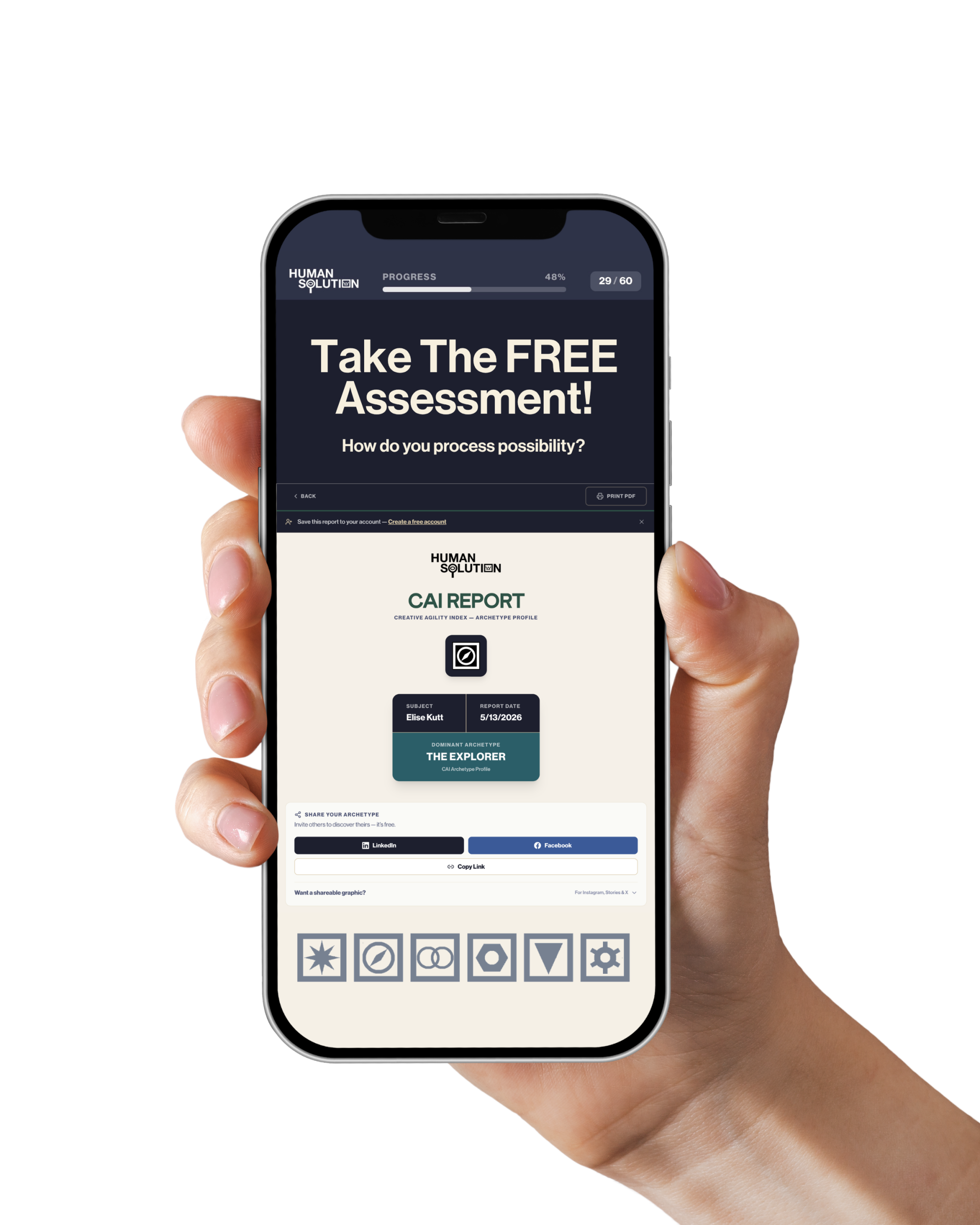
Take the BRAND NEW Creative Agility Index.
Then send me your result. I genuinely want to know. Partly because I love this work. Partly because I am The Explorer and I need more data to poke with a stick.
With curiosity, warmth, and 25 open tabs,
Elise
P.S. If your result makes you laugh, feel a little exposed, and immediately think of three coworkers who need to take it, congratulations. The assessment is working.
Take the Quiz. Find Your Archetype.
🧰 Free Leadership Resources: