
Not a Wellness Routine: A Quick Round-Up of Nervous System Resets
Pick one technique. Try it for 60 seconds. Repeat as needed.
Stress doesn’t wait until you’re rested, regulated, and holding a mug that says breathe.
It shows up mid-email. Mid-meeting. Mid-“I don’t have time for this.”
These are a few body-first stress tools pulled directly from our SHE and ManageSmart Burnout module workbook—designed to help your nervous system settle before you try to think your way through anything.
Sometimes a little self-prescribed 60-second “time-out” can help you make better choices, communicate more clearly, and/or generally just show up as a better version of yourself.
Pick one. Try it for a minute. See what shifts.
(That’s it. No TED Talk.)
Important Note: These tactics are effective because of the bidirectional connection between your brain and body. Your physiological state influences your mental and emotional well-being, and conversely,
your mind can proactively affect your body’s physiology. It’s a two-way loop.

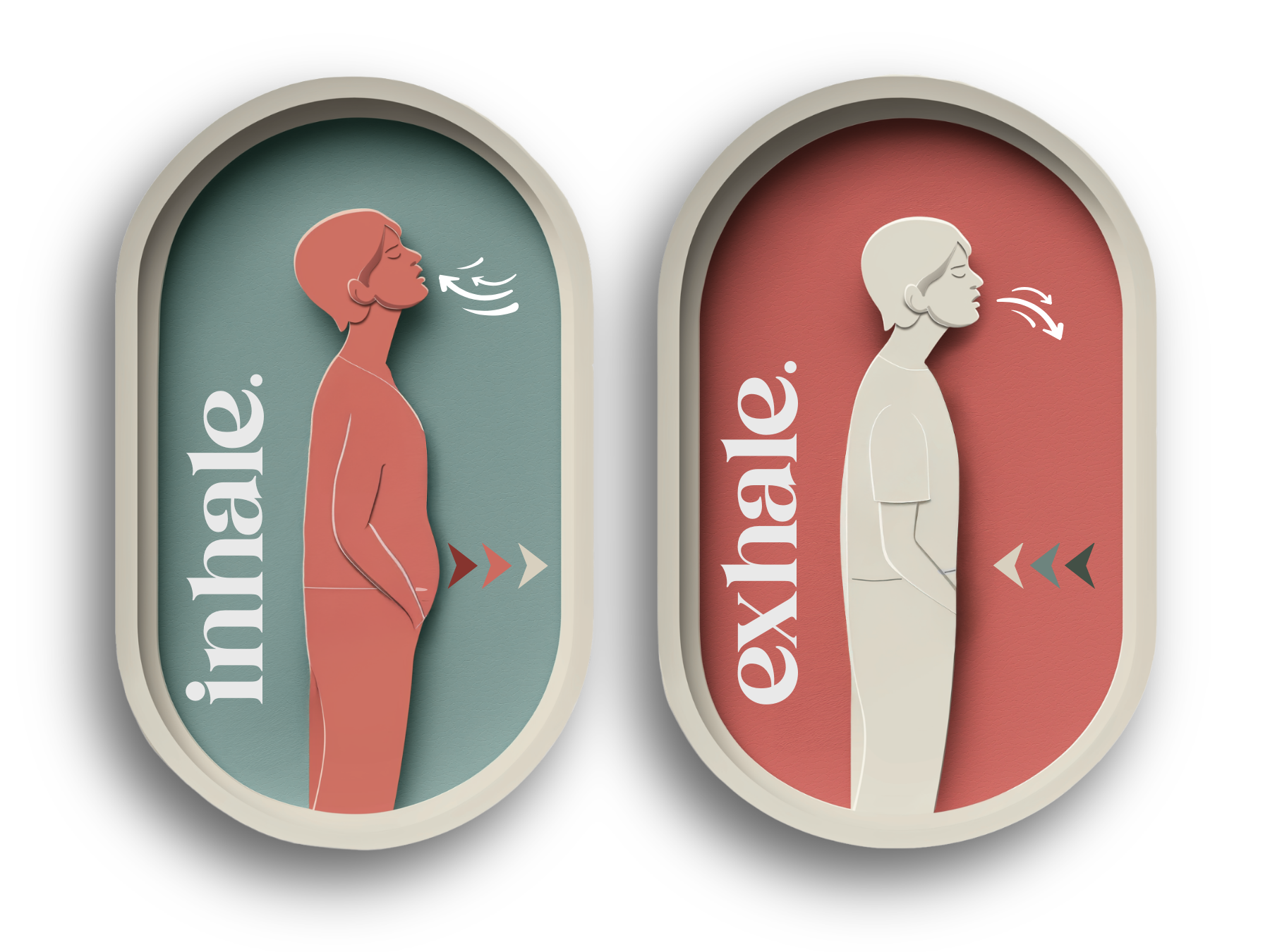
1. Simple Extended Exhale
When to use:
You feel keyed up, buzzy, restless, or like your body is ahead of your brain.
How it works:
1. Inhale through your nose for a comfortable count.
2. Exhale through your mouth for longer than you inhaled.
3. Pause briefly at the bottom of the exhale.
4. Repeat for 4–6 rounds.
Why it helps:
Longer exhales activate the parasympathetic nervous system (the “we’re okay now” signal). You’re not forcing calm—you’re giving your body a clear cue to downshift.
Think: slower out than in.
2. Box Breathing
When to use:
Your thoughts are racing, you feel overwhelmed, or you need to regain focus quickly.
How it works:
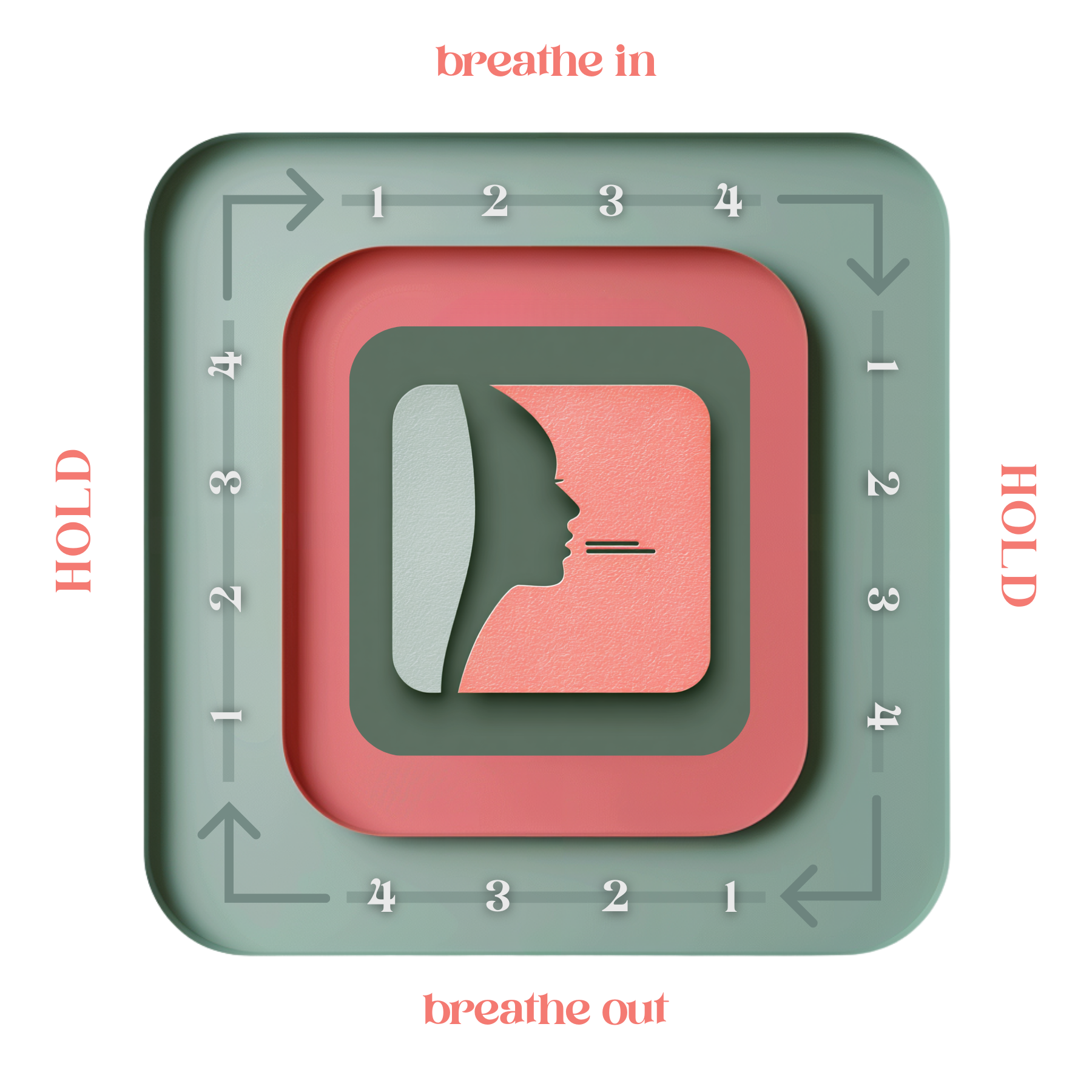
1. Inhale through your nose for 4.
2. Hold the breath for 4.
3. Exhale through your mouth for 4.
4. Hold again for 4.
5. Repeat for 3–5 rounds.
Why it helps:
The steady rhythm gives your nervous system something predictable to follow. Predictability = safety. Safety = calmer physiology.
If 4 feels like too much, shorten the counts.
This is not a breath-holding competition.
3. The Physiological Sigh (30–60 seconds)
When to use: racing thoughts, tight chest, panic-adjacent energy
How it works:
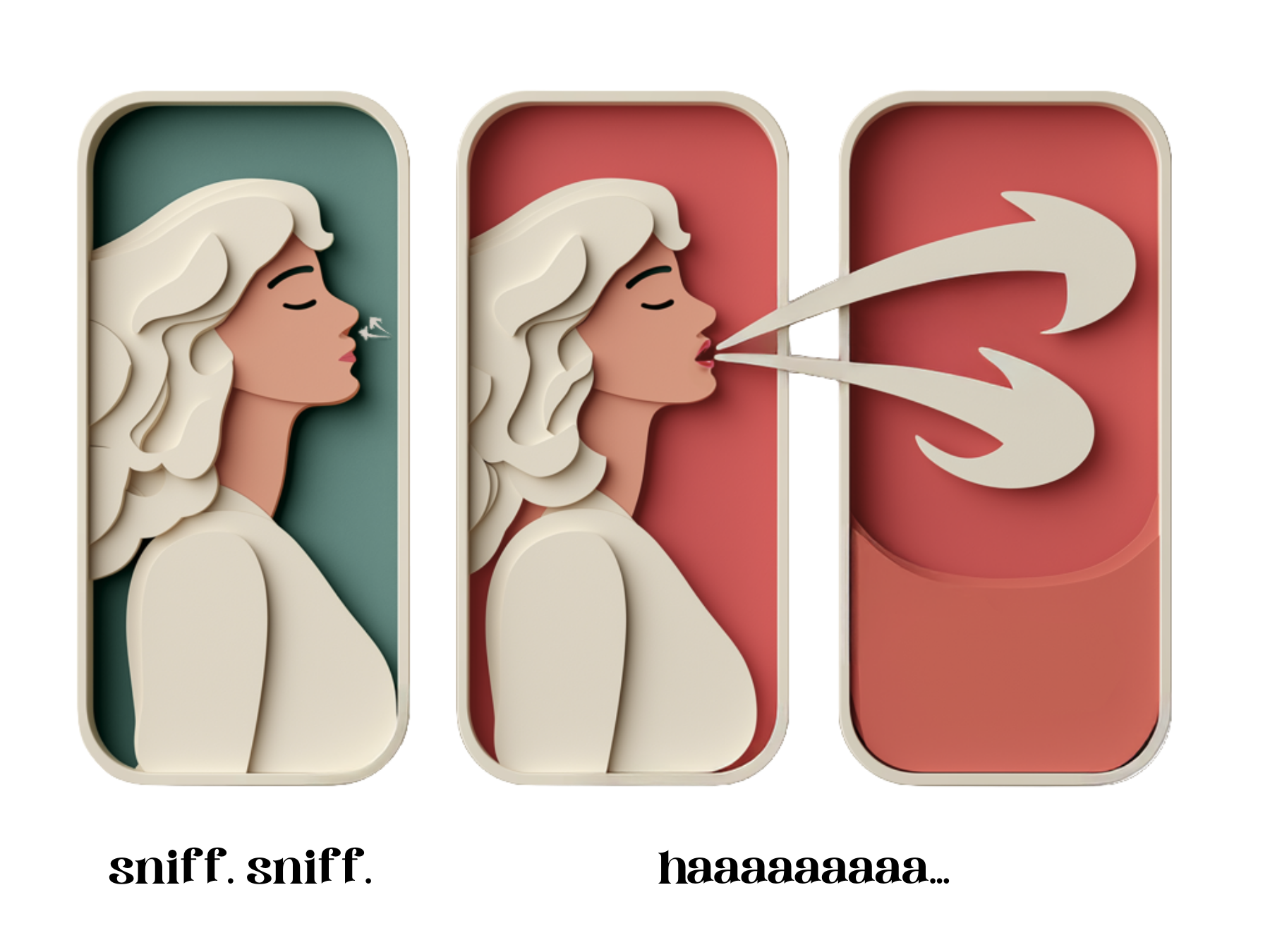
1. A strong inhale through the nose. SNIFF.
2. Without releasing, take another sip of air through your nose. SNIFF.
3. A strong, accelerated exhale through the mouth. HAAAA.
4. Repeat 2-3 times or until you feel a shift in your heart rate and physiology.
Why it helps: it’s the fastest way to tell your nervous system “we’re not in danger”
Try it twice. Don’t overachieve.
4. Peripheral Vision + Yawn Exercise (1 minute)
When to use:
You feel tense, hyper-focused, or stuck in “tunnel vision.”
How it works:
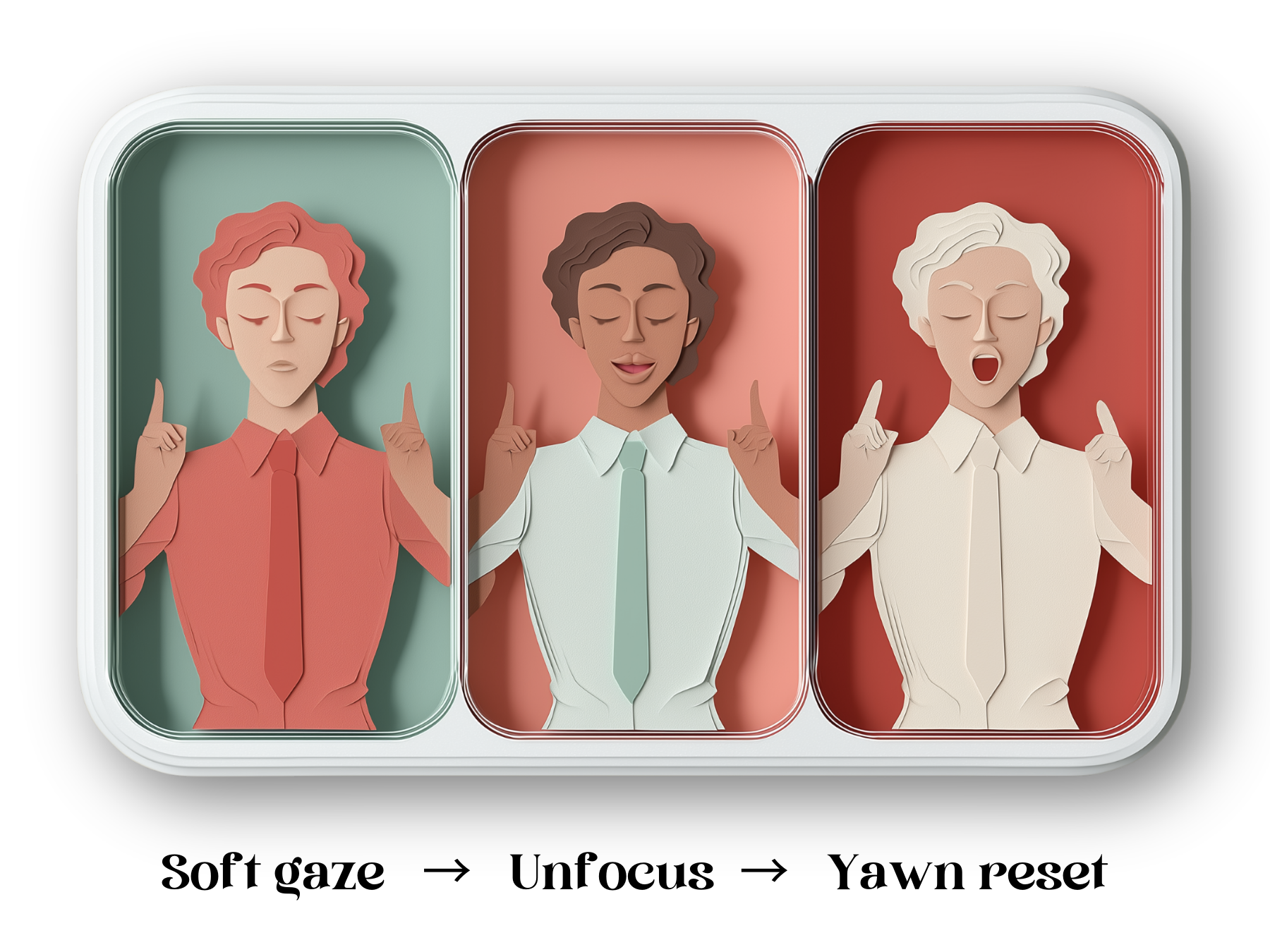
Keep your head still and gently widen your gaze.
Without moving your eyes much, notice what’s in your peripheral vision.
Allow a natural yawn—or even a fake one—to happen.
Let your jaw relax.
Why it helps:
Wide, relaxed vision is a signal of safety to the nervous system. Yawning further activates calming pathways and helps release tension in the face, neck, and jaw.
This isn’t about seeing more. It’s about letting your system soften.
5. Tapping (Emotional Freedom Technique)
When to use:
You feel emotionally activated, stuck in a loop, or unable to settle.
How it works:
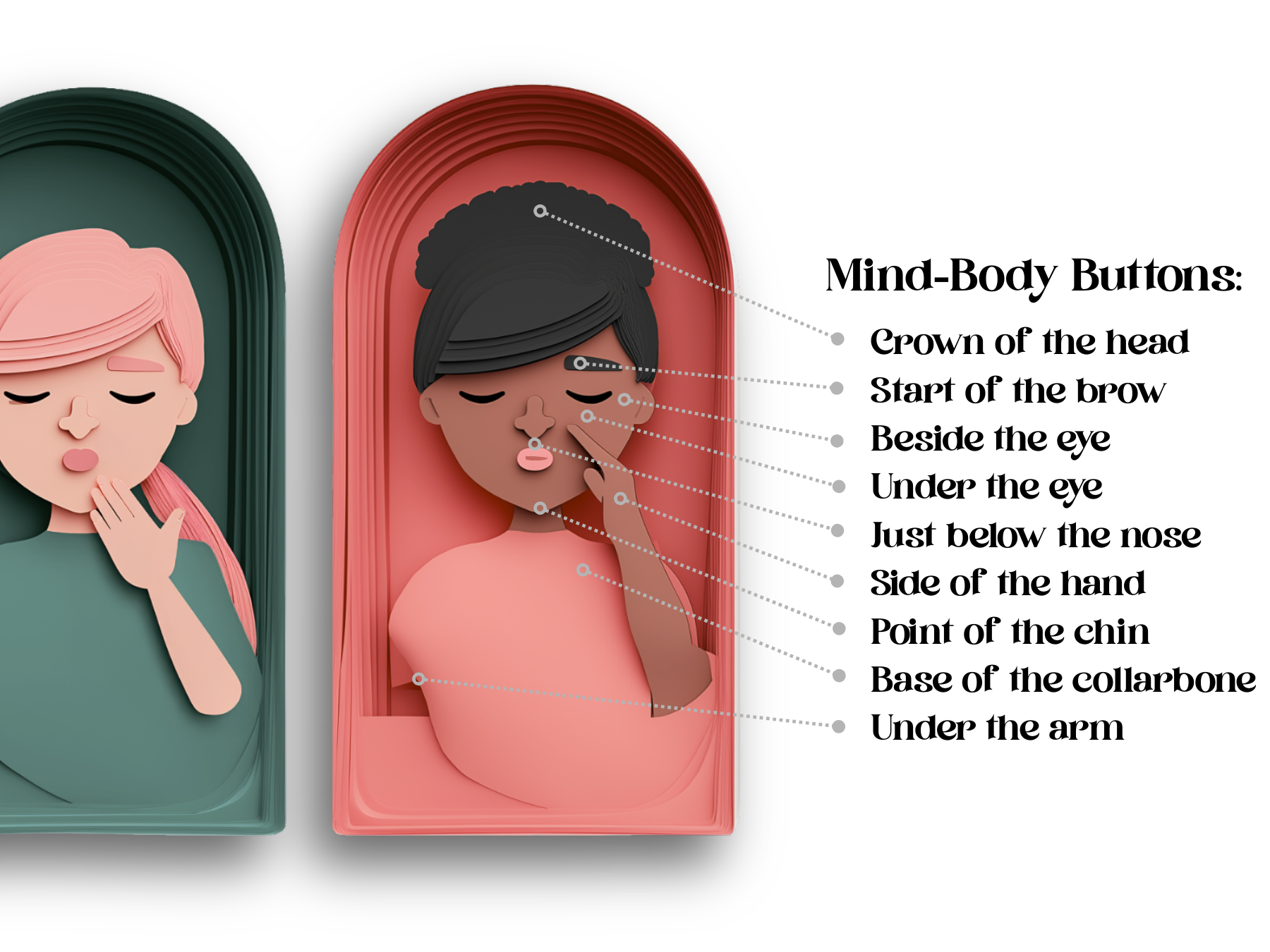
Gently tap on a sequence of points (head, face, upper body).
While tapping, name what you’re feeling or simply notice sensations.
Continue for 30–90 seconds.
Why it helps:
Tapping combines rhythmic touch with focused attention, which can help calm the nervous system and reduce emotional intensity.
You don’t need the “right” words. The rhythm matters more than the script.
A Reminder
Using stress tools doesn’t mean something is wrong with you.
It means your nervous system is doing its job—sometimes a little too enthusiastically.
These practices aren’t about fixing yourself. They’re about working with your physiology so you have more capacity for whatever comes next.
And remember: one minute done imperfectly still counts.
Save this post. Share it with someone who’s white-knuckling their way through the week.
Rooting for your nervous system this holiday season,
Anna & The Human Solution Team